
When people see a field experiment, they often notice the crops, sensors, weather stations, and many other elements pertaining to it. What they don’t always see are the people behind every measurement, installation, and decision. Before data can be collected and discoveries made, a great deal of work goes on behind the scenes.
This week, we’d like to provide a glimpse of the process that brought the Water-Food Futures field experiments to life in Hyvinkää.
Digging holes for sensor installation
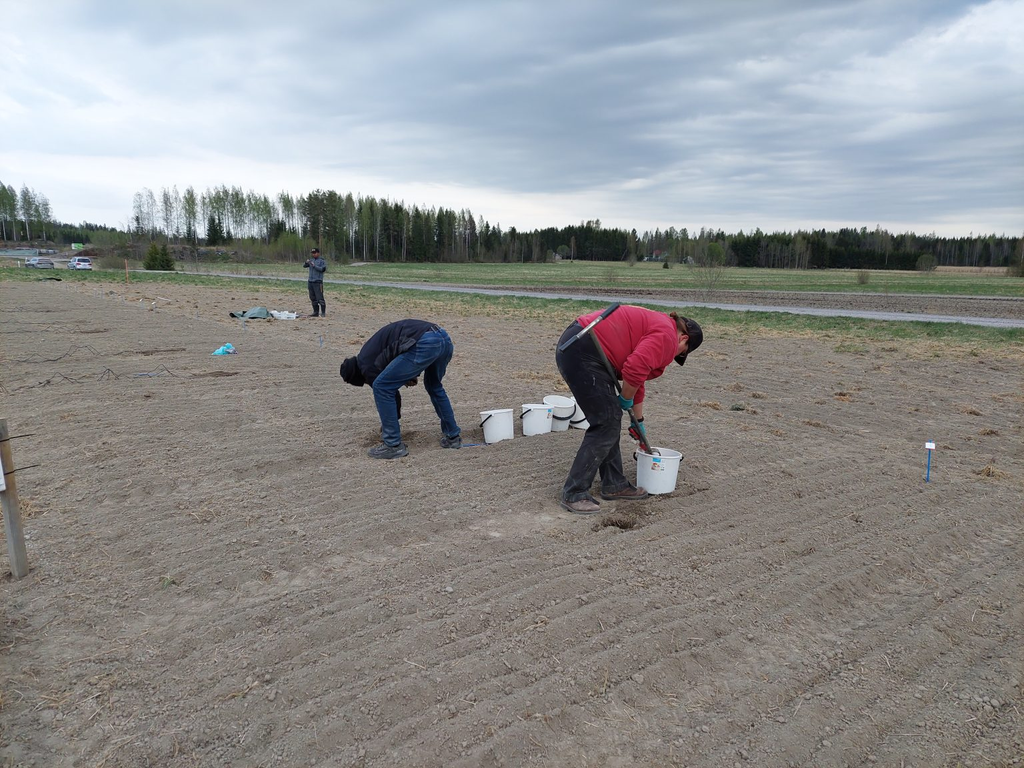
Every great experiment starts from the ground up—quite literally. Preparing installation points for soil sensors is one of the first steps in setting up the field site. These sensors will help us monitor what is happening beneath the soil surface, providing valuable information about water movement and availability throughout the growing season.
Soil sampling
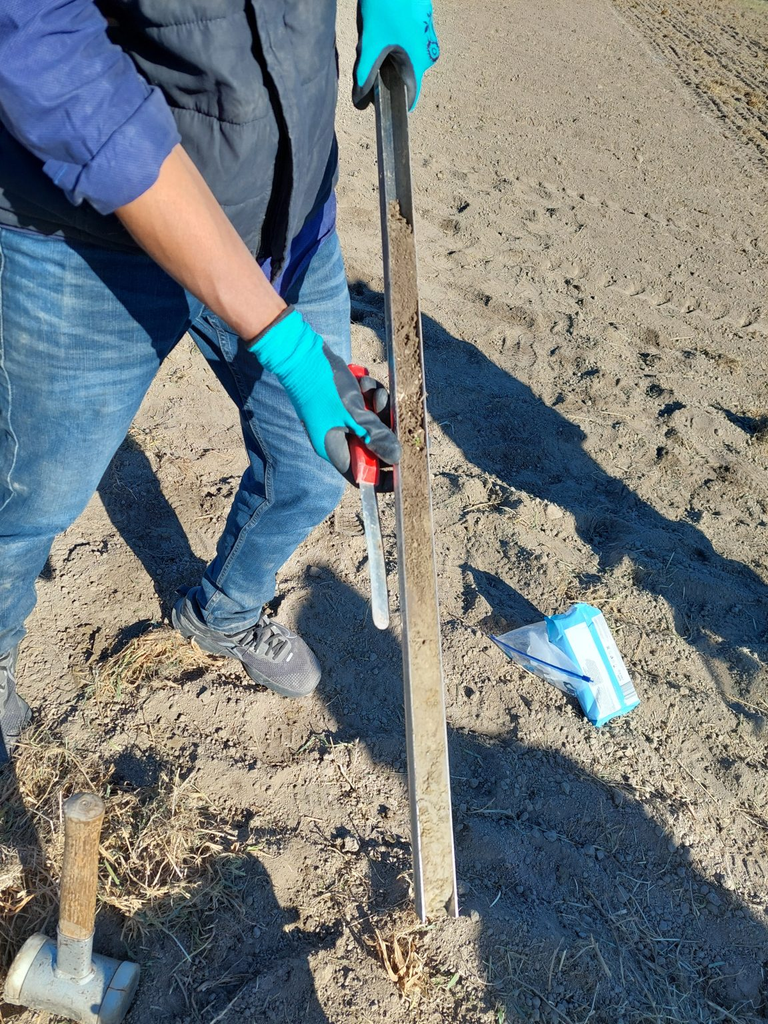
Healthy soils are the foundation of productive agriculture. By collecting and analyzing soil samples, we can better understand the physical and chemical properties of the field. These measurements provide important context for interpreting how crops respond to different water conditions.
Sensor installation
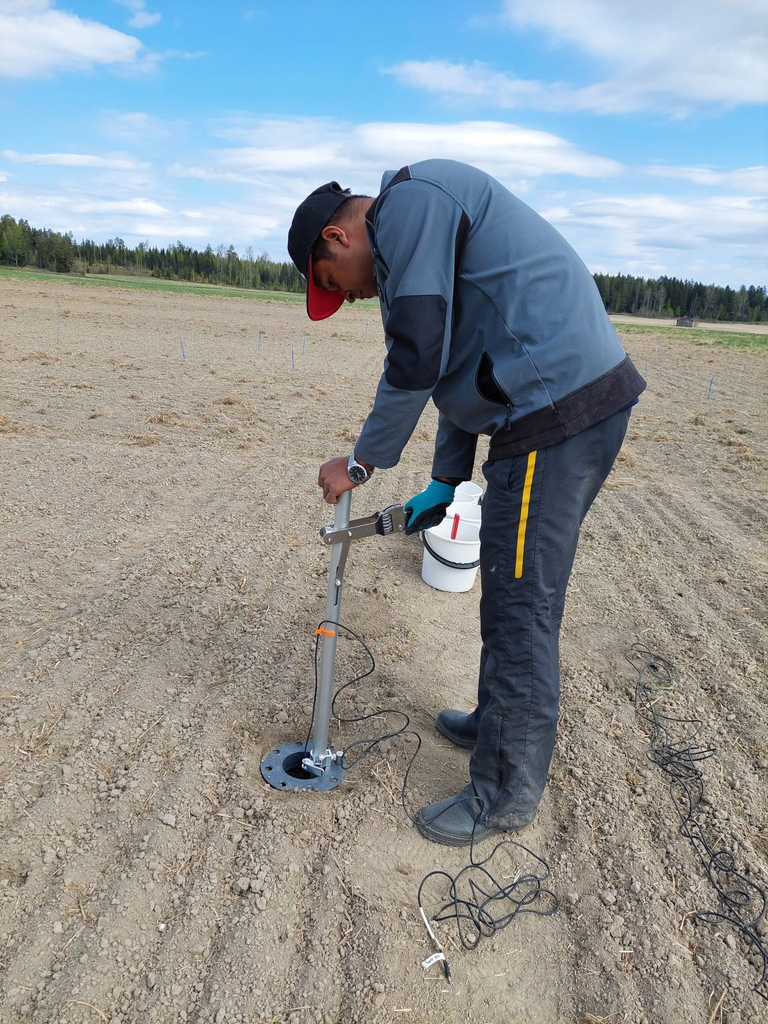
Some of the most important changes in a field happen where we cannot see them. Soil sensors continuously track conditions below ground, allowing us to monitor how water is stored and used over time. These measurements help connect weather conditions with crop performance.
Building the rainout shelter
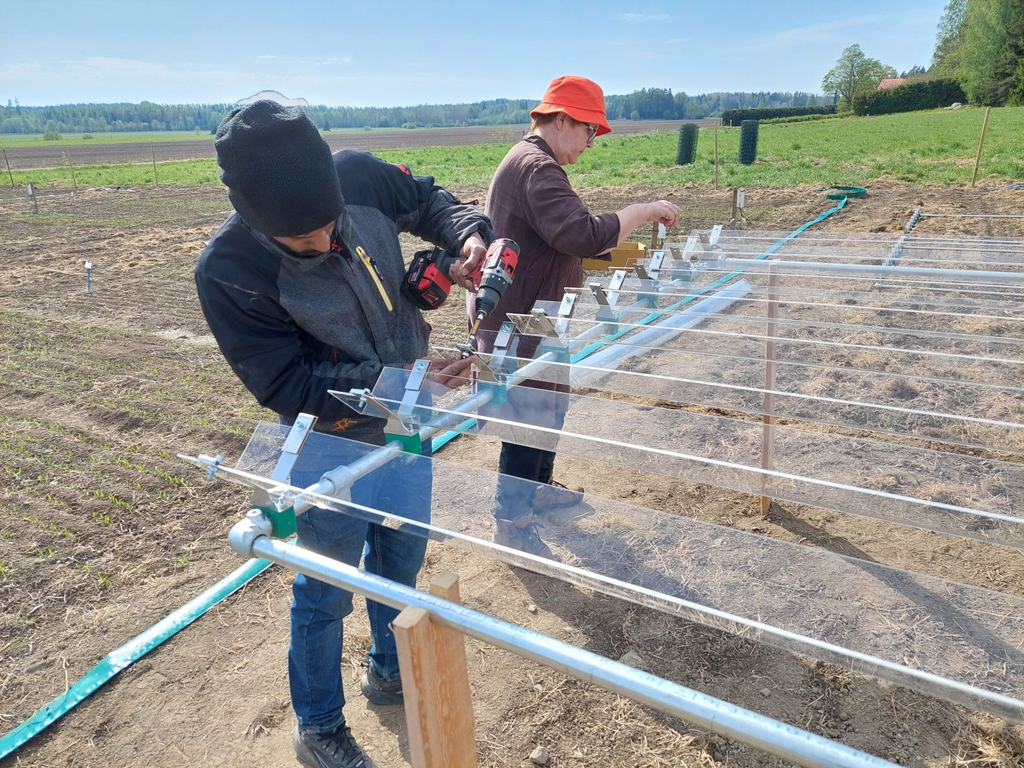
What happens when crops receive less water than usual? Rainout shelters allow us to create controlled conditions that help answer this question. By excluding rainfall from selected plots, we can better understand how crops respond to water limitations and identify strategies that improve resilience.
Drip irrigation layout
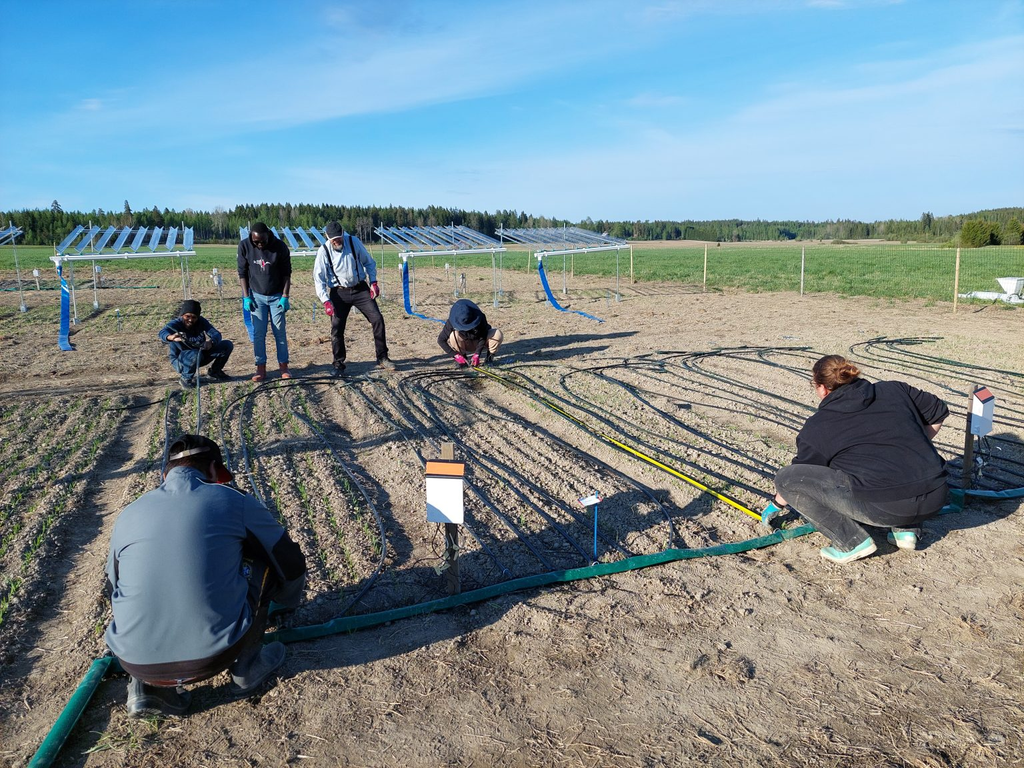
Do crops tell a different story when they receive too much water? Field experiments take a lot of careful planning before the crops can tell us their secrets. To find out what happens when plants get too much of a good thing, our team set up a specialized drip irrigation system. This setup lets us deliver perfectly controlled amounts of extra water to specific plots. By intentionally over-watering some of the crops, we can watch exactly how they react, helping us understand how to protect future harvests from heavy rains and flooding.
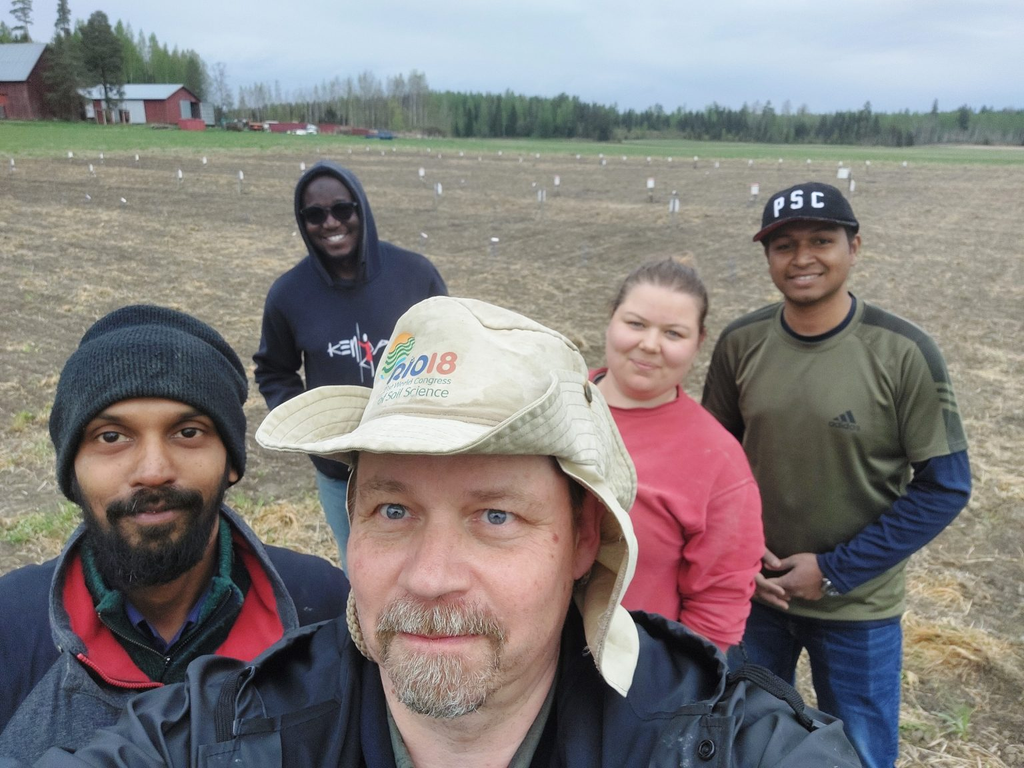
While each activity plays an important role, none of them happens alone. Setting up a field experiment requires expertise from many different disciplines, from agronomy and soil science to environmental monitoring and modelling. Every measurement, sensor, and sample represents a shared effort toward a common goal: developing knowledge that supports more resilient and sustainable agricultural systems.
Over the coming weeks, we’ll continue taking you behind the scenes of our field activities and sharing the discoveries, challenges, and lessons that emerge from the field.
Jimmy Awori
Postdoctoral researcher
University of Helsinki